
Bear-Proof Bird Feeders: What Works, What Doesn't
No bird feeder or feeder pole is on the bear-resistant product lists we check. Here is what wildlife agencies actually advise instead.
On this page8 sections
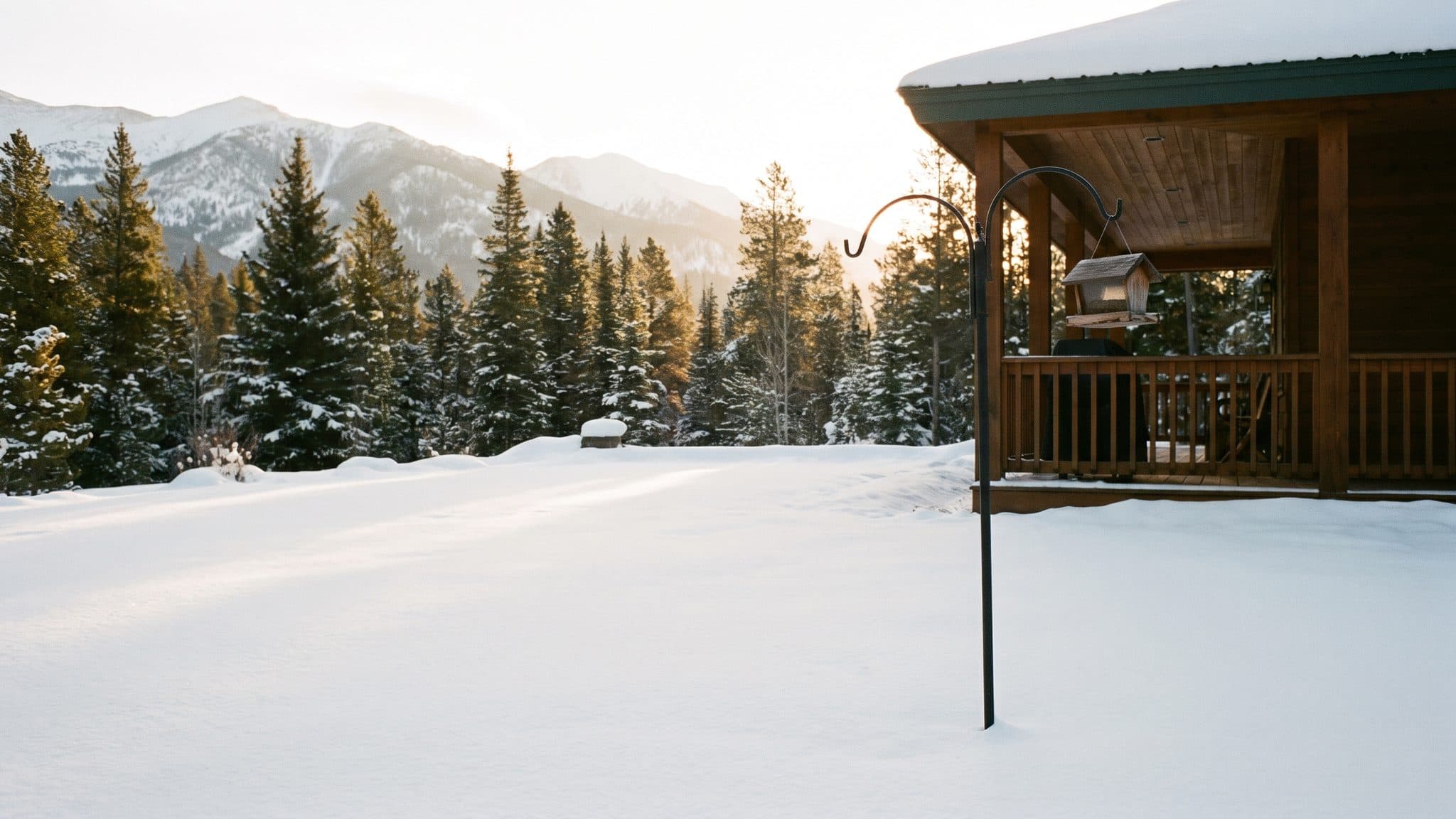
Bears are drawn to the seed, not to the feeder. BearWise says the sight and smell of a feeder can pull a bear in even when it cannot reach it, so removing the food is what agencies recommend.
Is Any Bird Feeder Certified Bear-Proof?
No, not that we could find. Here is exactly what we checked. The Interagency Grizzly Bear Committee (IGBC) certifies products against captive grizzlies. Its full list, as we transcribed it (current as of October 22, 2026), covers backpacking and small storage containers, panniers and boxes, coolers, garbage containers and food lockers, and accessories. Searching our copy for "feeder," "bird," and "pole" returned nothing. You can read it yourself on our full IGBC list page.
The Wildlife Management Institute (WMI), a nonprofit, runs a separate program with the Southeastern Association of Fish and Wildlife Agencies (SEAFWA) that tests products against captive black bears. WMI's approved-products page lists no bird feeders, and our copy of the WMI products we track contains locks and covers only. The one non-trash item we know of on that page is a composter, covered in our bear-proof composting guide.
What that means in plain terms: a feeder or pole marketed as "bear-proof" or "bear-resistant" is the maker's description, not a certification from either program. We are not saying a particular product fails. We are saying we could not find independent bear testing for any of them. For the products that are certified, see our certified products database and how we verify.
When to Take Bird Feeders Down in Bear Country
BearWise, the program run by state wildlife agencies, says to take feeders down when bears are active. It adds that in the temperate Southeast, bears may be active year-round, so you should ask your local fish and game agency what the active period is where you live. It also notes that some states prohibit intentional or unintentional bear feeding.
Agencies give different dates, which is why we do not give one:
- Colorado Parks & Wildlife says to remove feeders from April through November, when bears are most active. In another part of the same page it says not to feed birds from mid-March through early November.
- Vermont Fish & Wildlife asked residents in a March 2020 release to take feeders down by April 1, as bears leave their dens. In a 2022 release it said to keep them down until there is a foot or more of snow in December.
- Minnesota DNR (March 2026) encouraged homeowners to remove feeders and says "Bird feeders can become bear feeders."
BearWise adds a reason beyond the seed itself: bears that find human-provided food face a higher risk of being removed, hit by vehicles, or shot or trapped. A bear can also stay under a feeder for hours and look around the property for other food.
Bird Feeder Pole Height: What Agencies Say
Two agencies we read describe how to hang a feeder if you choose to keep one out. They agree on the numbers:
- Colorado Parks & Wildlife: hang feeders on a pulley system so they are 10 feet off the ground and 10 feet from anything a bear can climb, such as trees or climbable structures.
- North Carolina Wildlife Resources Commission: do not hang a feeder from your house or deck. Use a free-hanging wire away from the home, with the feeder at least 10 feet off the ground and at least 10 feet from any tree trunk.
Read those carefully. They describe a spacing, not a certified product, and neither agency calls a feeder or pole "bear-proof." Both agencies list taking feeders down as the main step. So a store-bought pole with a baffle is not something these sources endorse; if a seller quotes a bear-proof claim, ask what independent testing stands behind it. Our deterrent accessories guide covers what is and is not certified.
Spilled Seed, Nighttime, and Storing Birdseed
Spilled seed. Colorado says to keep the ground under feeders clean of seed and hulls. Vermont says bears are especially drawn to suet and black oil sunflower seed, and that they can smell it from far away.
Bringing the feeder in at night. The agencies are not unanimous. North Carolina advises bringing feeders indoors at night. Vermont says that is not enough, because bears will still feed on seed that has spilled on the ground. If you do bring a feeder in, the ground cleanup matters just as much.
Storing the seed. We did not find agency guidance written specifically for birdseed storage. BearWise does say animal feed belongs in a sturdy locked building or secure enclosure, and that locking bear-resistant containers are good for storing animal feed. Birdseed is a high-calorie food that BearWise lists with garbage and pet food as a bear attractant, so treating it the same way is reasonable, but that is our inference, not a quote. See bear-proof enclosures and the certified products list for storage options that are actually certified.
Hummingbird Feeders and Bears
Sugar water is a bear attractant too. BearWise says a typical 7-pound birdseed feeder holds over 18,000 calories, and that 32 ounces of hummingbird nectar contains about 3,200 calories. North Carolina tells residents to take down bird and hummingbird feeders when bears are in the area. Colorado says seed, suet, and hummingbird feeders all attract bears and gives no separate hummingbird rule.
We found no agency guidance on a lower-risk way to keep nectar out during bear season. For a hummingbird alternative, Colorado suggests planting red, orange, or pink tubular flowers.
Feeding Birds Without Feeding Bears
BearWise publishes a bulletin titled "Attracting Birds, Not Bears" on drawing birds without feeders. Clean your feeders and store them indoors until winter, as BearWise advises. Colorado also says a suet block placed nearby can distract woodpeckers from damaging siding.
BearWise also says an electric mat or fence can protect a feeder, and shows a solar energizer protecting a bird feeder and a compost bin. We found no agency spec written only for feeders, so for any electric setup follow the general fence requirements in our composting guide and check local rules first. For the bigger picture, see how to keep bears away from your house and our guide to other attractants like coops and beehives.
Quick Answers
Sources
Read directly from the publisher and last checked November 5, 2026.
- Remove Bird Feeders When Bears are Active · BearWise
- What's on the bear menu? Everything · BearWise
- Keep Bears Out · BearWise
- Electric Fencing (photo caption: solar energizer protecting a bird feeder and compost bin) · BearWise
- Protect your home from wildlife · Colorado Parks & Wildlife
- Bears in Residential Areas · North Carolina Wildlife Resources Commission
- F&W suggests removing bird feeders by April 1 (March 16, 2020) · Vermont Fish & Wildlife Department
- Composting with Bears in Mind (July 5, 2022) · Vermont Fish & Wildlife Department
- Prevent conflicts with bears this spring by being BearWise (March 23, 2026) · Minnesota Department of Natural Resources
- Approved Black Bear Resistant Products · Wildlife Management Institute (with SEAFWA)
Keep the rest of the yard bear-wise
Feeders are one attractant. See what agencies say about trash, smells, noise, and fences.
Read the Yard Guide