Bear-Proof Bird Feeders, Chicken Coops, Beehives & Compost
A certified bear-proof trash can solves one attractant. Here's real, agency-sourced guidance for bear-proofing five more — including the specific electric-fence voltage each one actually needs, which turns out to genuinely differ by use case.
On this page8 sections
For four of these five attractants, wildlife agencies converge on the same answer: electric fencing. The exact specs just aren't identical.
Bear-Proof Bird Feeders & Feeder Poles
The honest answer first: we found no certified bear-resistant bird feeder or feeder pole on the market — not IGBC, not WMI/SEAFWA. Every "bear-resistant" feeder pole or baffle we checked relies on height and a squirrel-style baffle, with no live-bear testing behind it. See our full accessories audit for the specific products we checked.
The real, agency-consistent guidance instead: take feeders down entirely during active bear season (roughly April through November in most of bear country, per Colorado Parks & Wildlife's own property guidance) rather than relying on height or design. A bear's sense of smell works regardless of how high a feeder hangs.
Bear-Proof Deer Feeders
The Florida Fish and Wildlife Conservation Commission publishes the most detailed agency-tested guidance we found: use an automatic or timed feeder instead of an open ground pile, hang it with the bottom at least 8 feet — preferably 10 feet — above the ground, seal the top to keep grain dry (fermenting grain draws bears from farther away), and site it away from swamps, creeks, and heavy cover. FWC even ran a public "Bear-Proof Your Feeder" design competition and publishes six field-tested, dimensioned plans — skid-mounted, tripod, electrified tripod, and pole-suspension designs — with real construction specs (post depth, footing, cable/winch hardware).
A genuinely underused fact: Pennsylvania makes it unlawful to place food, grain, or minerals in a way that "may cause bear... to congregate or habituate an area" — a real, dated statute (58 Pa. Code § 137.33) that targets bear-conflict risk directly, not disease control. Colorado and Montana separately prohibit feeding big game in ways that attract bears too. If you feed deer in bear country, check your state's specific rule before assuming it's unregulated — several states treat this the same way Colorado treats unsecured trash.
Bear-Proof Chicken Coops
BearWise states this plainly: "A sturdy, lidded pen may keep out a fox or a raccoon, but it won't deter a determined bear." Their own conclusion: "a properly constructed, installed and maintained electric fence is the most fool-proof, powerful and long-lasting bear-deterrent available" for coops.
If you're not electrifying, Colorado Parks & Wildlife and CSU Extension recommend a sturdy frame with ½-inch welded wire mesh buried 8-12 inches underground (plain chicken wire is explicitly called out as insufficient), human-only latches, a secure roof, and — critically — locking birds into a secure structure at dusk, since most predator activity happens between dusk and dawn.
Feed storage matters as much as the coop itself: BearWise is specific that "plastic tubs won't keep out bears" — feed needs a genuinely bear-resistant container or a locked building, never left in the coop or on a porch.
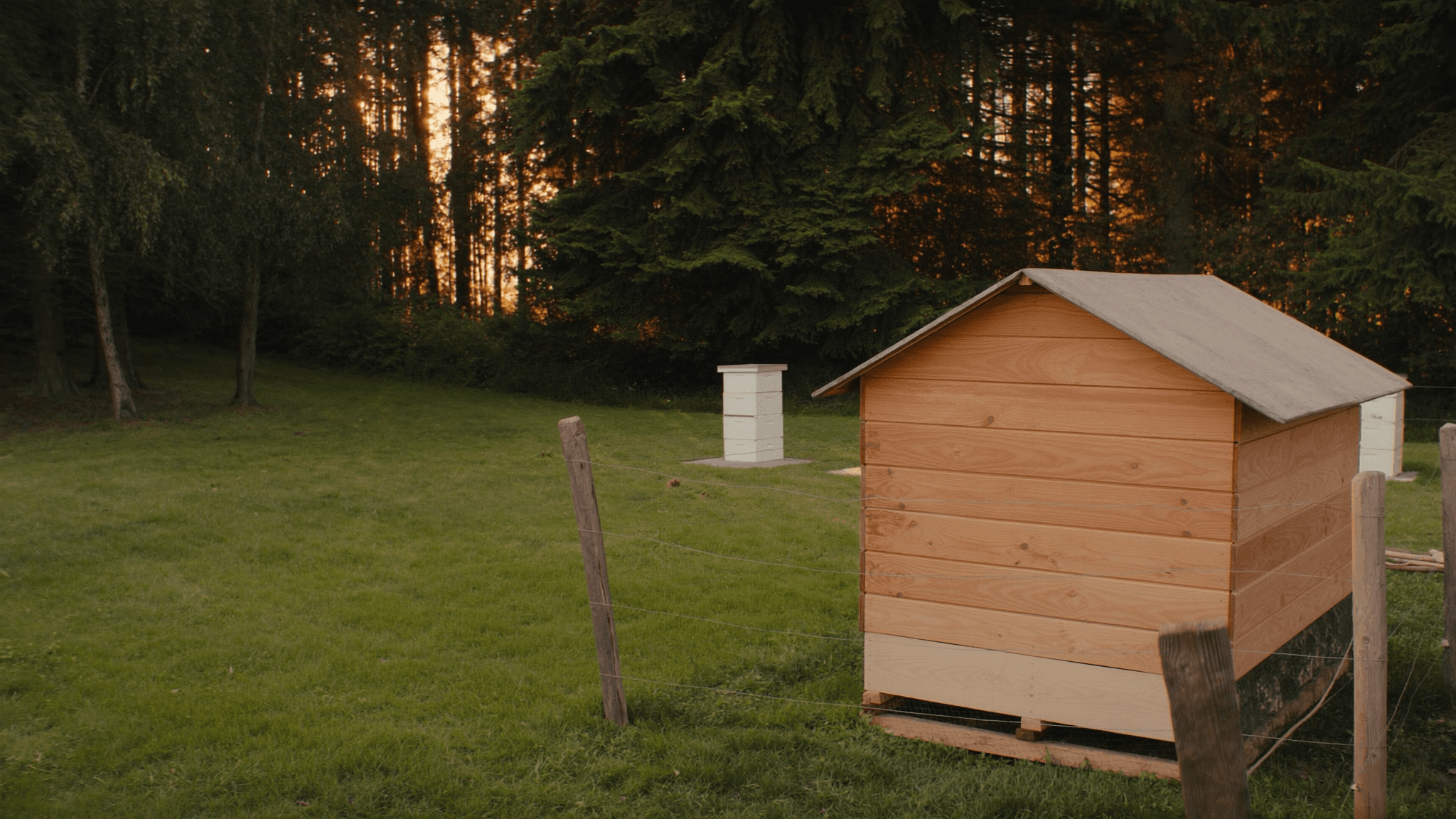
Bear-Proofing Bee Hives and Beehives
Electric fencing is again the consistent agency answer, but — worth being upfront about — the exact voltage recommendation genuinely varies by source; we're giving you each agency's real number rather than averaging them into something nobody actually said. Minnesota DNR's official bulletin specifies a minimum 4,000 volts and 0.7-joule energizer with three 6-ft galvanized ground rods; University of Florida IFAS Extension recommends 6,000-8,000 volts on a three-wire setup; a beekeeping guide hosted on Vermont Fish & Wildlife's site (compiled by the Vermont Bearhound Association, not written by state biologists — worth knowing when weighing its authority) recommends five wires starting at just 3,000 volts.
Siting matters too: BearWise recommends keeping hives at least 300 feet from forest or dense cover, with hives placed at least 3 feet inside the fence line — bears have a longer reach than people expect.
A real, concrete detail most sites won't have: Colorado has run a game-damage compensation program since the 1930s that reimburses beekeepers for bear damage, and CPW provides free apiary electric-fence layout plans in multiple sizes (8'×8' up to 40'×40'+ for commercial operations) — contact your local CPW District Wildlife Manager immediately if damage occurs. We couldn't confirm whether having a fence installed is a strict precondition for compensation, so don't treat that as guaranteed — but the fencing plans themselves are real and free.
Bear-Proof Compost Bins and Bear-Proof Composters
One real certified product exists here: the Grizzly Guard Composter, WMI-certified against live black bears — see our full accessories guide for details. We checked other composters marketed as bear-resistant (Critter-Proof Composting, Lifetime's tumbler) and found no certification behind either — one even explicitly disclaims the claim in its own marketing.
For a standard pile or tumbler, both Vermont Fish & Wildlife and BearWise converge on the same practical rules: never compost meat, bones, dairy, or fats — freeze scraps for trash day or trench-compost them instead. Keep a roughly 3:1 ratio of browns (dry leaves, straw, wood chips, cardboard) to greens (vegetable scraps, coffee grounds, fresh clippings) to cut odor, and consider a tumbler over an open pile — Vermont F&W calls enclosed tumblers "especially challenging for bears to open." Some agencies mention ammonia-soaked rags near the pile as a low-cost extra layer, but Alaska Fish & Game calls ammonia a myth for garbage, so treat it as an add-on at best and never a substitute for keeping the pile unappealing (see our agency-sourced guide to keeping bears away).
Bear-Proof Fence: Electric Fence Specs, Side by Side
Same core technology, genuinely different numbers depending on what you're protecting and which agency you ask — attributed individually rather than blended into one made-up average.
| Use case | Spec | Source |
|---|---|---|
| Chicken coops | 3-6 strands, 7-9" to 36-42", ≥6,000V / 0.5J (0.7J in grizzly country) | BearWise Bulletin #3 |
| Beehives | Min. 4,000V / 0.7J, 3 wires at specific heights | Minnesota DNR |
| Beehives | 6,000-8,000V, 3 wires (8"/20"/32") | University of Florida IFAS Extension |
| Deer feeders | Electrified-tripod design (voltage not specified) layered onto feeder structure | Florida FWC |
For a ready-made kit rather than a DIY build, see the real electric-fence products (Premier1 Bear QuikFence, Gallagher Portable Bear Fence Kit) we cover in the accessories guide.
Quick Answers
Trash can still the biggest attractant on your property?
Browse every certified container we've verified.
Browse the Certified Database