
How to Keep Bears Away From Your House and Yard
What wildlife agencies actually say about smells, ammonia, lights, noise, bear spray, and electric fences, and what to do if a bear is already there.
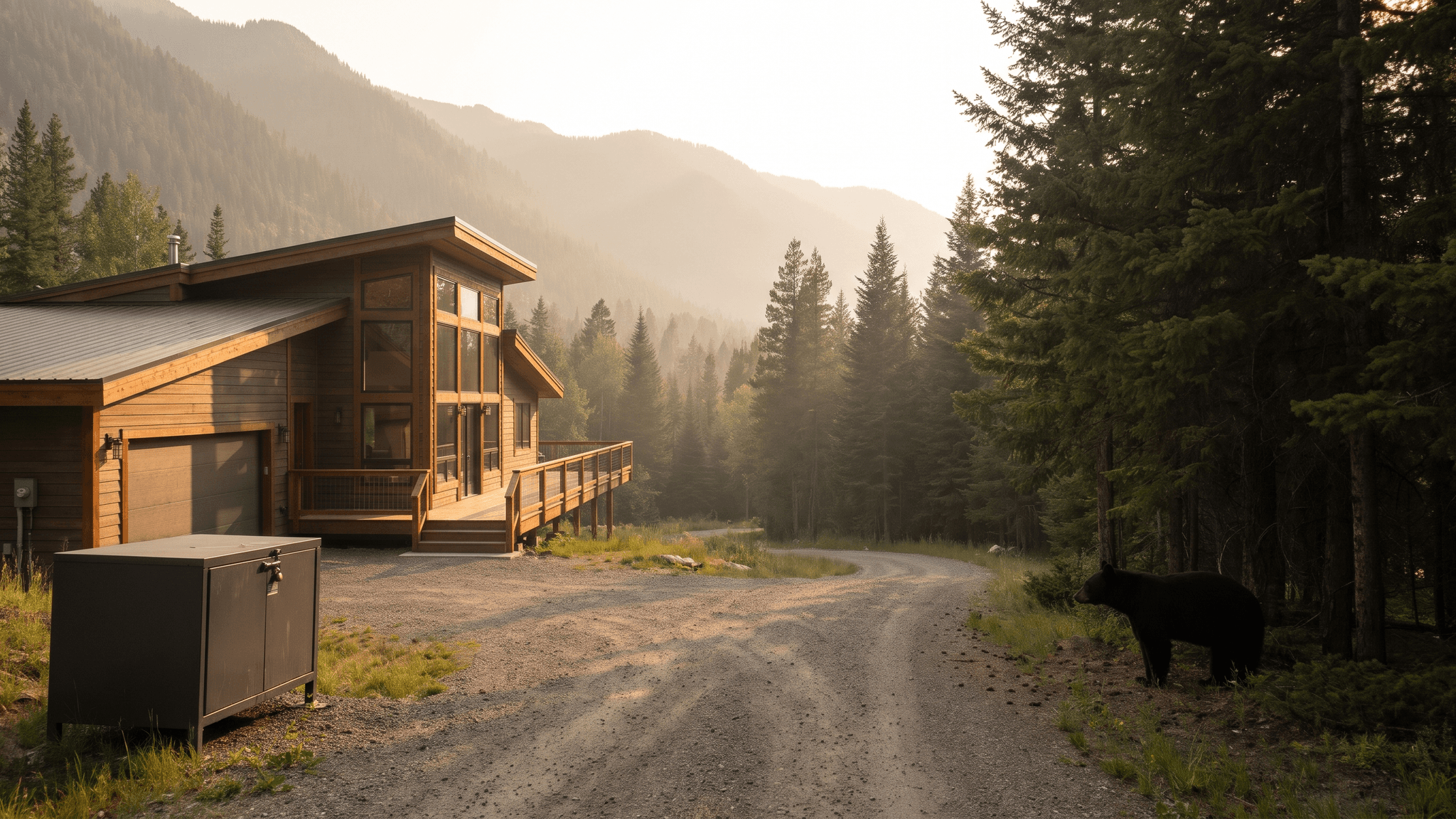
On this page10 sections
Every agency says the same thing underneath: a bear keeps coming back because it found food. Lock up or remove what it smells, and everything else, from noise to fences, is just buying time.
This guide only repeats what named wildlife agencies say, with a link to each source at the bottom. Where agencies disagree, we show the disagreement instead of picking a side. Where we found no agency guidance, we say so.
What Smells Do Bears Hate? What Agencies Actually Say
Bears have an extraordinary sense of smell. BearWise says they can pick up a scent from over a mile away; Colorado Parks & Wildlife says a bear can smell food from as far as five miles. Neither number is a promise, but the point is the same: you cannot out-smell what is inside your trash can.
Does ammonia keep bears away? Agencies disagree.
- Alaska Dept. of Fish & Game lists "ammonia or moth balls keep bears out of garbage" as a myth and says household products like these don't work.
- Pennsylvania Game Commission says ammonia has repelled bears from bait sites, but some bears eventually ignore it, and bears that kept raiding garbage cans in Juneau were not repelled by ammonia-treated cans. It says the Commission occasionally recommends ammonia for backyard bears.
- Colorado Parks & Wildlife says some people have had success with covered buckets of bleach or ammonia, with holes in the lids, placed outside doors and windows. It warns never to mix bleach and ammonia. It does not recommend either as a trash-can repellent.
- California Dept. of Fish & Wildlife gives ammonia in a shallow bowl as one example of a "sensory deterrent."
- BearWise: the pages we read say nothing about ammonia or bleach as deterrents.
Mothballs, pine cleaners, and pepper
The National Pesticide Information Center (not a bear agency) says mothballs have little or no effect as repellents, and that using them as a repellent is not allowed unless the product label says so. We found no agency guidance recommending pine-scented cleaners or kitchen pepper to deter bears.
What agencies do say about smell: keep cans clean
Colorado says to clean your trash can with bleach once a week to remove leftover smells. BearWise says to clean trash containers often and to avoid fruit-scented cleaners. Cleaning lowers the odor but does not make the can bear-proof; a certified bear-proof trash can does that.
Does Bear Spray Keep Bears Away From Trash?
No. Colorado says spraying bear spray on objects to deter bears doesn't work, and that the dried pepper residue creates odors that may attract bears. The National Park Service says bear spray has no repellent properties for gear and is meant for defense against an aggressive bear, and Montana Fish, Wildlife & Parks calls it a highly effective deterrent when you carry it and use it on an approaching bear. Colorado adds that it is no substitute for taking the proper bear-proofing steps.
Do Motion Lights, Noise, and Alarms Keep Bears Away?
Only for a while. BearWise says motion-activated sprinklers and alarms may startle bears but are not permanent solutions, and that noise is the core of safe hazing because it buys time to secure what attracted the bear. Colorado says varied noises or flash patterns may work better than repetitive ones. California's Tahoe guidance says air horns, motion lights, and banging pots may be ineffective there because bears have become desensitized to urban sights and sounds. We found no agency guidance on ultrasonic devices, so we can't say they work.
Do Electric Fences Keep Bears Out?
This is the best-supported deterrent in the research. BearWise says one encounter with an electric fence or "unwelcome mat" can teach a bear to leave your things alone, and that no single deterrent is 100 percent effective, so combine methods. Alaska says electric fences used properly can keep bears out of gardens and compost, but that a fence does not substitute for a clean camp. California says it has used electric mats safely in front of doors and under windows for over a decade. See our guides on bear-proofing feeders, coops, and beehives for agency fence specifications, and bear deterrent accessories for what is actually certified.
What Works Best: Secure What They Smell
BearWise lays out a storage ladder for trash: a sturdy locked building first, then a secure enclosure, then a bear-resistant container. It says never to store trash under decks or porches and that screens don't keep bears out. Agencies also agree on timing: put trash out the morning of pickup, not the night before (BearWise, Alaska, Pennsylvania, and the IGBC all say versions of this).
Pennsylvania says not to strap cans to a tree or post because it gives the bear leverage, and BearWise suggests modifying a can with nylon straps and buckles or locking hasps, not stretchy rubber. Straps are not certified, so they are a stopgap. The certified options are bear-proof trash cans, a bear-proof trash can enclosure, or a certified retrofit lock. For the full trash playbook, see how to keep bears out of your trash.
A Bear Is in Your Yard Right Now: What to Do
From BearWise's guidance for a bear in your yard and its hazing rules.
- Watch from a safe place such as an open window, porch, or deck. Don't let your dog out, and don't chase, approach, or feed the bear.
- Make noise (yelling, banging pots) while leaving the bear an escape route. Never corner it.
- If the bear approaches, don't run. Use bear spray.
- Don't scare it if that could push it toward people, dogs, or a road, and never scare a cub.
- Call your wildlife agency if the bear seems agitated, sick, or injured, approaches people, or won't leave.
- After it leaves, find what attracted it, remove every attractant, and tell your neighbors. Bears may come back if they found anything edible.
BearWise notes that scaring a bear is done at your own risk.
Why This Matters for the Bear, Too
Colorado Parks & Wildlife says feeding a bear, or letting one eat your trash, can be a death sentence for it, and that habituated bears often must be killed. Alaska distinguishes the two problems: a food-conditioned bear has learned to link people with food, while a habituated bear is simply comfortable enough to ignore people. Securing your trash is the single most useful thing you can do for both you and the bear.
Quick Answers
Sources
Pages and documents read for this guide, last checked November 5, 2026. We paraphrase; check the source for exact wording.
- BearWise: Help! There's a bear in my yard
- BearWise: Scare the bear (hazing rules)
- BearWise Bulletin #5: Secure Trash (New York edition)
- Colorado Parks & Wildlife: Protect your home from wildlife
- Colorado Parks & Wildlife: Living with bears
- Alaska Dept. of Fish & Game: A Framework for Bear Safety Messages in Alaska (2017)
- Pennsylvania Game Commission: Management and Biology of Black Bears in Pennsylvania
- Pennsylvania Game Commission: FAQ
- California Dept. of Fish & Wildlife: Black bears
- California Dept. of Fish & Wildlife: Tahoe Basin toolkit
- California Dept. of Fish & Wildlife: Unwelcome mats
- National Park Service, Voyageurs: Bears and food storage
- Montana Fish, Wildlife & Parks: Loud noise and bear spray (2021)
- National Pesticide Information Center: Mothballs
- Interagency Grizzly Bear Committee: Landowners
Ready to actually secure the trash?
Answer a few questions and get a shortlist of certified bear-proof trash cans.
Find My Bear-Proof Match